MSLS Partners LLC Helps Tax, Accounting & Financial Advisory Firm Save Approximately $6,000 Per Year With Open-Source Technology
MSLS Partners LLC Helps Tax, Accounting & Financial Advisory Firm Save Approximately $6,000 Per Year With Open-Source Technology
MSLS Partners LLC designed and deployed a self-hosted contact management and CRM solution for Rooney & Hodgens LLC using XCP-ng, Xen Orchestra, Ubuntu Linux, Docker, and Twenty—helping the organization reduce recurring software expenses while giving staff access to a centralized business contact platform.
Schedule an IT Consultation See the ResultEstimated Annual Savings
By replacing an expensive recurring software dependency with a carefully engineered open-source and self-hosted solution.
Technology Should Solve Business Problems
At MSLS Partners LLC, we believe technology should solve real business problems—not create unnecessary complexity, recurring expenses, or dependence on software that no longer aligns with the organization's actual needs.
Recently, MSLS Partners worked with Rooney & Hodgens LLC, a tax, accounting and financial advisory firm, to modernize how the organization manages and shares business contacts across its team.
The company had been using Canopy primarily for contact management. However, the organization's actual requirement was much more focused: users needed a centralized and reliable platform for shared business contact information.
1. Reduce Recurring CostsThe existing approach created significant annual software expenses for functionality beyond the organization's primary contact-management requirement. |
2. Centralize ContactsUsers needed a common platform for accessing and working with shared business contact information. |
3. Use Existing InfrastructureThe new solution could leverage virtualization infrastructure already available to the organization. |
The Business Challenge
Rooney & Hodgens LLC needed users across the organization to access shared contact information. Continuing to maintain a larger recurring software platform primarily for contact management created an opportunity to reconsider the firm's technology strategy.
MSLS Partners reviewed the operational requirement and evaluated whether a more targeted solution could provide the functionality the organization actually needed.
The project goals included:
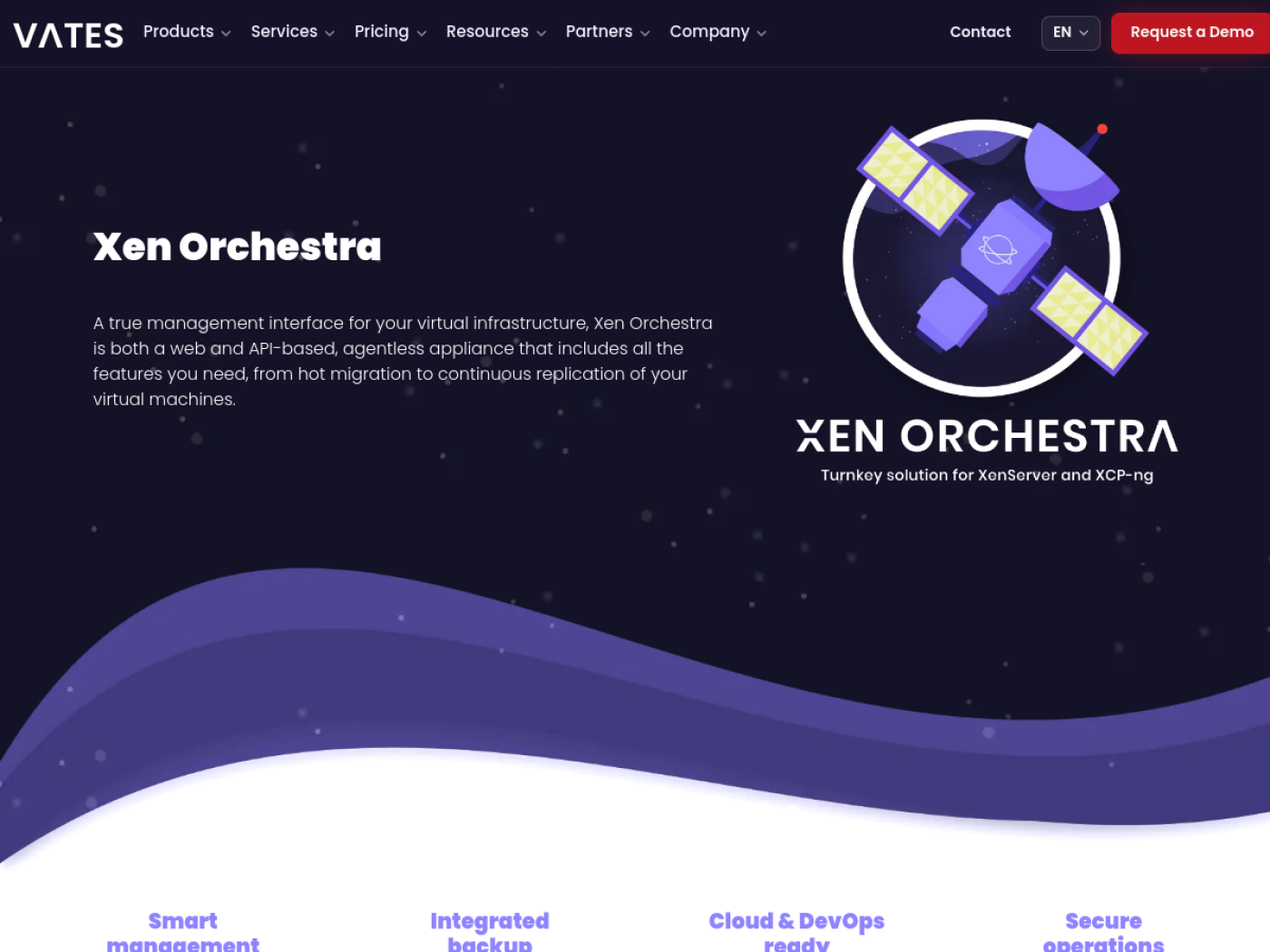
Xen Orchestra is the web-based management layer used with XCP-ng infrastructure. View the official Xen Orchestra page
The Technology Behind the Solution
MSLS Partners combined virtualization, Linux, containerization, and a modern open-source CRM platform into a layered business solution.
| XCP-ng Open-source virtualization foundation used to host the dedicated application virtual machine. | Xen Orchestra / XOA Centralized web-based management and operational visibility for the XCP-ng virtual environment. | Ubuntu Linux Dedicated Linux server environment created for the application workload. | Docker + Twenty Containerized deployment of the self-hosted CRM and contact management platform. |
The Final Architecture
MSLS Partners designed the environment in clearly defined layers. This makes the solution easier to understand, maintain, troubleshoot, document, and expand.
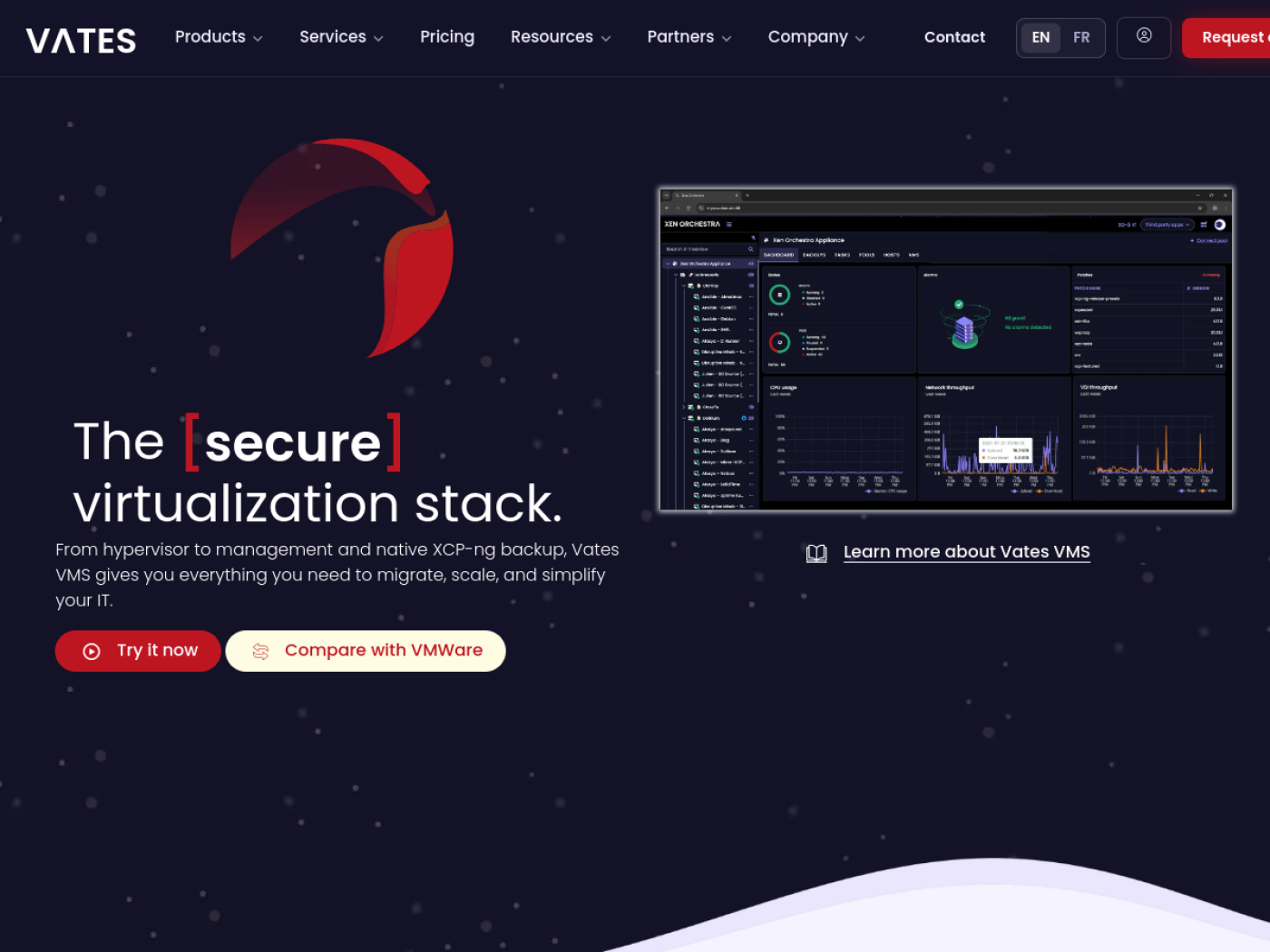
Public Vates website showing the broader open-source virtualization stack around XCP-ng and Xen Orchestra. Visit the official Vates website
Creating a Dedicated Ubuntu Virtual Machine
MSLS Partners provisioned a dedicated Ubuntu Linux virtual machine within the XCP-ng environment.
Using a dedicated VM allowed the Twenty deployment to operate within its own controlled server environment, with resources assigned specifically to the application workload.
This created a stronger operational foundation for:
Why MSLS Partners Used Docker
Instead of treating the CRM as a one-off server installation, MSLS Partners deployed the Twenty environment using Docker.
Containerization provides a structured approach to application deployment while maintaining a clear separation between the application services and the underlying Ubuntu virtual machine.
Cleaner DeploymentApplication services are organized within a defined container environment rather than becoming an unmanaged collection of server components. |
Easier MaintenanceA structured deployment improves documentation, troubleshooting, upgrade planning, and lifecycle management. |
Future FlexibilityThe environment can evolve as the organization's business and CRM requirements change. |
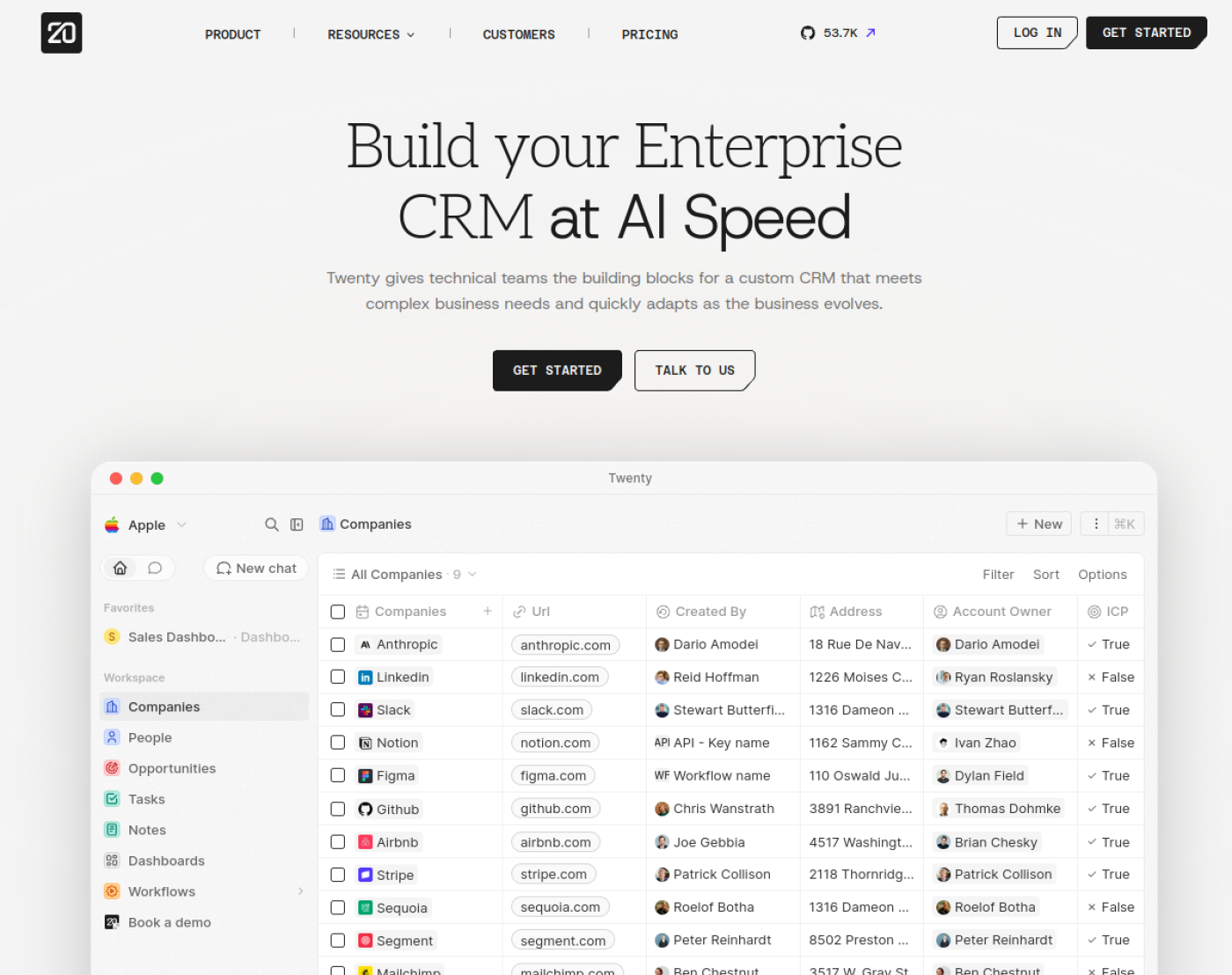
Twenty is the open-source CRM platform selected for the new self-hosted environment. View the official Twenty website
Why Twenty CRM?
For the business application layer, MSLS Partners selected Twenty, a modern open-source CRM platform that supports self-hosted deployment.
Twenty was a strong fit because Rooney & Hodgens LLC needed a centralized environment where organizational users could work with shared business contact information through a modern web-based interface.
Instead of maintaining a costly platform primarily for a subset of its capabilities, the organization could move toward a system more closely aligned with its actual operational requirement.
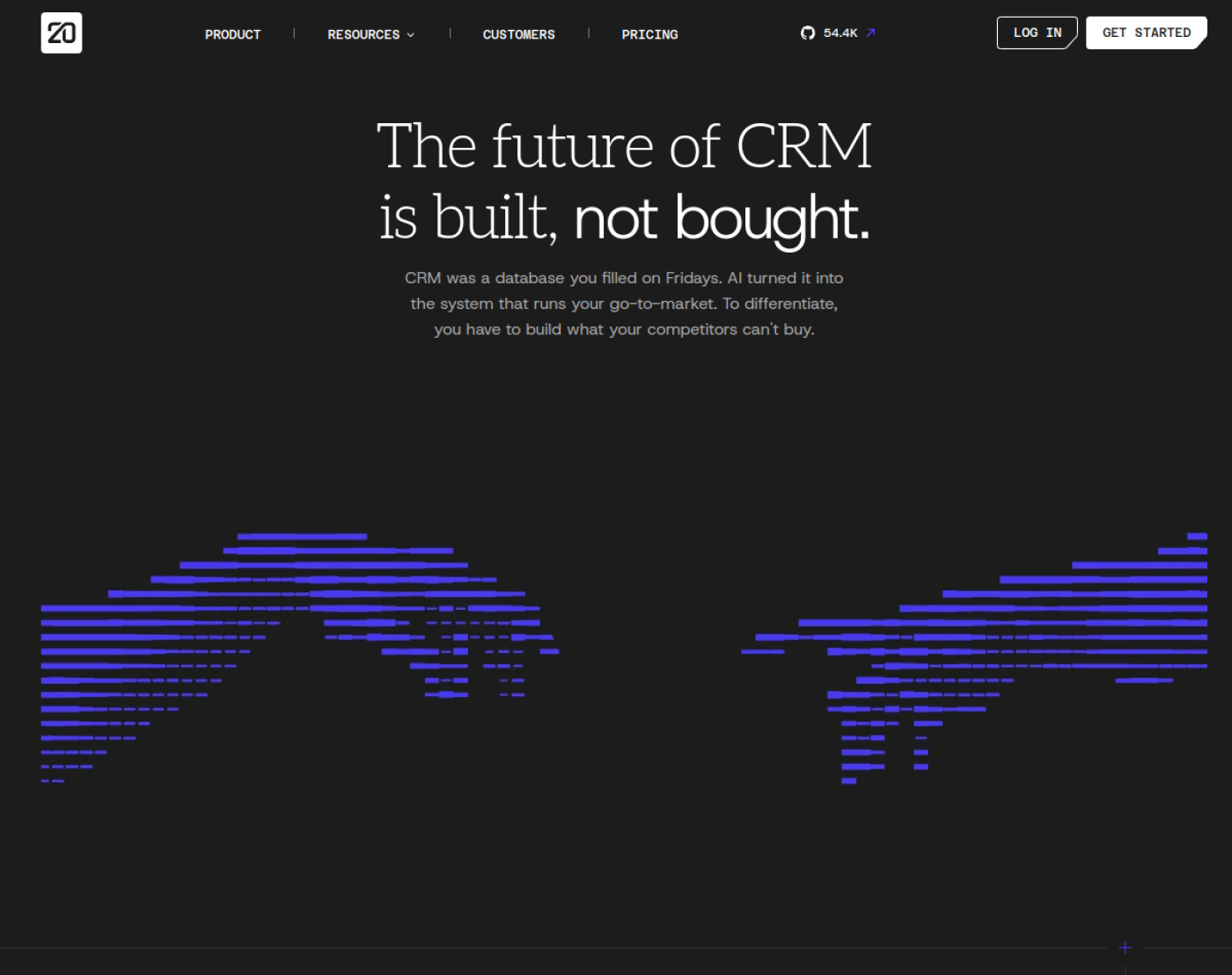
Public Twenty product page demonstrating the platform's modern CRM approach and interface. Learn more on Twenty's official website
Migrating Away From Canopy for Contact Management
Deploying the infrastructure was only part of the project. The real business value came from transitioning the organization's contact-management workflow.
MSLS Partners worked through the process of preparing contact information from the previous environment for use within the new Twenty platform.
Projects like this require careful attention to:
The goal was to ensure that the new platform became a usable business system—not simply another application running on a server.
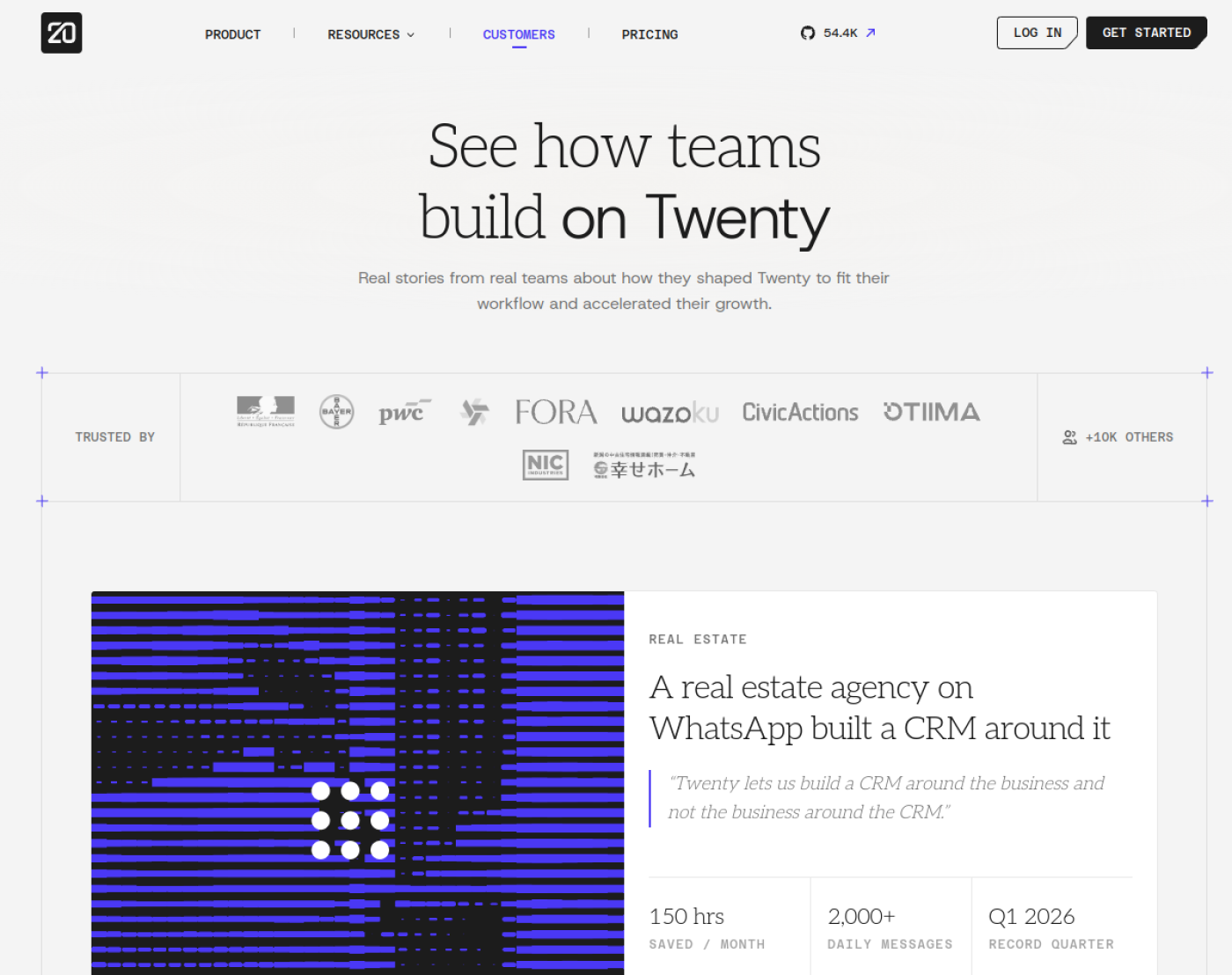
Twenty's public customer stories show examples of organizations adopting and shaping the open-source CRM platform. View Twenty customer stories
Organization-Wide Access
One of the most important outcomes of the project is that the new solution is now available as a centralized platform for users across the organization.
Instead of contact information being fragmented or dependent on a costly system that exceeded the company's primary requirement, the new environment provides a centralized approach.
Better VisibilityUsers can work from a common contact platform instead of isolated or fragmented information sources. |
Better CollaborationA centralized system improves consistency and makes shared business information easier to access. |
Better ContinuityImportant contact information becomes part of an organizational system rather than depending on individual users. |
The Financial Impact
Estimated recurring annual savings based on the organization's prior software costs and contact-management use case.
What Could the Long-Term Savings Look Like?
Based on estimated annual savings of approximately $6,000, the potential avoided recurring costs become increasingly meaningful over time.
| Time Period | Approximate Avoided Recurring Cost |
|---|---|
| 1 Year | ≈ $6,000 |
| 3 Years | ≈ $18,000 |
| 5 Years | ≈ $30,000 |
These figures illustrate an important part of technology consulting: the answer is not always to continue renewing the same software indefinitely.
Sometimes the correct approach is to step back, determine what the organization actually uses, identify what it actually needs, and evaluate whether a better architecture can deliver that capability more efficiently.
Open Source Does Not Mean “Just Install Free Software”
At MSLS Partners, we think this distinction is important.
The value of this project did not come from simply downloading an open-source application.
The real work involved designing and integrating a complete business solution:
A Better Use of Existing Infrastructure
Another important part of the project was the ability to leverage infrastructure already available to Rooney & Hodgens LLC.
Rather than immediately recommending another expensive SaaS subscription, MSLS Partners reviewed the broader technology environment and designed a solution that could take advantage of the organization's virtualization capabilities.
We do not believe every business problem automatically requires:
Sometimes SaaS is absolutely the right answer.
Other times, virtualization, Linux, Docker, and carefully selected open-source applications can create a better technical and financial outcome.
The Result
Rooney & Hodgens LLC now has a modern, centralized CRM and contact platform supported by a carefully structured infrastructure stack.
The project delivered a practical combination of business modernization, infrastructure engineering, and recurring cost reduction.
More Than a Software Replacement
This project was not simply about replacing one application with another.
It was about aligning technology spending with actual business requirements.
For MSLS Partners, this is what practical IT consulting should look like:
Could Your Organization Be Overpaying for Software?
Many organizations are paying for software platforms that were purchased years ago, expanded over time, or are now being used for only a fraction of their original purpose.
MSLS Partners LLC helps organizations evaluate whether their current technology stack still makes operational and financial sense.
Infrastructure ModernizationVirtualization, Linux servers, Docker, containerized applications, and modern infrastructure planning. |
Open-Source SolutionsEvaluation and deployment of self-hosted business platforms when they make technical and financial sense. |
IT ConsultingBusiness-focused technology strategy designed around actual requirements instead of unnecessary complexity. |
Stop Paying for Technology Your Business Does Not Need
If your organization is paying for expensive software primarily to use a small portion of its capabilities, MSLS Partners can help evaluate whether a better technical and financial approach exists.
Contact MSLS Partners
MSLS Partners LLC
IT Consulting • Virtualization • Linux • Docker • Open-Source Solutions • Infrastructure Modernization
Project technologies discussed: XCP-ng, Xen Orchestra / XOA, Ubuntu Linux, Docker, and Twenty CRM.
Xen Orchestra: Visit the official Xen Orchestra page
Twenty CRM: Visit the official Twenty website
Twenty Self-Hosting Documentation: View the official self-hosting documentation
Estimated savings are approximate and based on the customer's prior recurring software costs and business use case. Actual costs and long-term savings may vary depending on infrastructure, maintenance, support, future licensing, and changing business requirements.
Public product imagery shown in this article is rendered from publicly accessible Vates and Twenty web pages for informational reference. XCP-ng, Xen Orchestra, Twenty, and related marks belong to their respective owners. The public product visuals are not screenshots of Rooney & Hodgens LLC's private production environment.
Comments
Post a Comment